Fascist domination of the Ferrara countryside
M: Son of the CenturyFascist domination of the Ferrara countryside was built through a sustained assault on the rural organizations that had governed work and political life, then consolidated by bringing impoverished farm laborers into fascist unions and mobilizing them as a force capable of confronting the state. Its development joined coercion to a promise of practical provision: the squads dismantled socialist institutions, while Italo Balbo’s May 1922 occupation of Ferrara demanded public works for unemployed workers. The resulting power was local in its organization but national in its implications, exposing a liberal state increasingly unable to enforce its authority.
A rural order under pressure
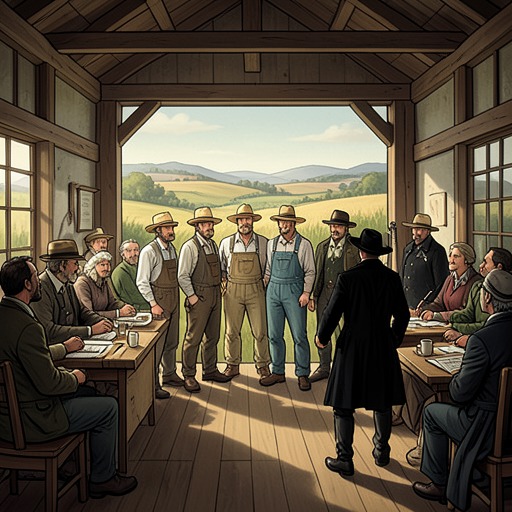
Before the fascist ascendancy, socialist leagues and associated institutions held extensive influence across the countryside. Earlier accounts describe villages organized around farmers’ unions, cooperatives, and the Casa del Popolo, while labor leagues regulated hiring and working conditions. In Ferrara, a province dominated by the leagues, seasonal farmhands and sharecroppers had won a collective agreement that included wage increases, worker-managed recruitment, and compulsory hiring quotas. These arrangements reflected the precariousness of farm work: laborers might find work for only part of the year, and their ability to earn enough to survive depended on the terms governing employment.
By 1920 the leagues’ reach extended well beyond wage bargaining. They managed labor placement, work shifts, threshing operations, seed supplies, and crop planting. A breach of their common rules could expose a worker or landowner to penalties and social exclusion. The account presents this control as both a response to the farmhands’ economic vulnerability and a source of intense conflict with landowners and small proprietors. Ferrara’s leagues registered 81,000 members by mid-May 1920, and their influence over rural work made the province a principal arena in the struggle over who would direct agricultural life.
Destruction of the leagues
The shift toward fascist control proceeded through coordinated attacks on the organizations that sustained socialist influence. On April 8, 1921, the employment bureau at Jolanda was burned and its administration forced to resign. After squadrista Arturo Breviglieri was killed during a raid in Pontelagoscuro two days later, fascists occupied the town, burned its Chamber of Labor, and compelled local socialists to submit to a public act of humiliation. On April 11, fascists attacked the Chamber of Labor at Granzette and killed its treasurer, Luigi Masin, at home in front of his family.
The campaign widened rapidly. On April 14, about a hundred squadristi held Ferrara under siege for two days while attacking the Casa del Popolo and the railwaymen’s association. The next day, Umberto Donati was killed during a meeting in Roncodigà after proposing a return to the Chamber of Labor. Attacks continued against organizations in Bondeno, Gaibanella, and Ostellato. Within a few months, nine chambers of labor, a cooperative, and nineteen peasant leagues in Ferrara had been destroyed. The Rovigo Chamber of Labor, where Giacomo Matteotti had been formed politically, ceased to exist after repeated destruction of its property.
The consequences were not limited to the loss of buildings or offices. As fascist pressure spread, some rural workers tore down red flags and moved into fascist unions; those who resisted faced further violence and the destruction of their livelihoods. Across northern Italy, 80 percent of socialist and Catholic organizations had been dissolved or placed under prefectural administration during 1921, and some socialist mayors resigned under pressure. In Ferrara, the movement’s growing control was visible in the collective movement from red leagues to fascist unions. The reversal was striking precisely because it involved workers whose recent political affiliations had been socialist, not simply the replacement of one set of leaders by another.
Balbo’s occupation of Ferrara
Balbo’s May 1922 mobilization converted this rural ascendancy into a direct challenge to the government. The underlying problem was seasonal unemployment: farm laborers could find work during winter, but many were idle in April and May. Balbo proposed occupying Ferrara with a mass movement that would force the government to provide public works, offering employment to workers who had entered the fascist unions without threatening the interests of the agrarians who financed the fasci. Benito Mussolini authorized the plan, while making Balbo responsible for the consequences if it failed.
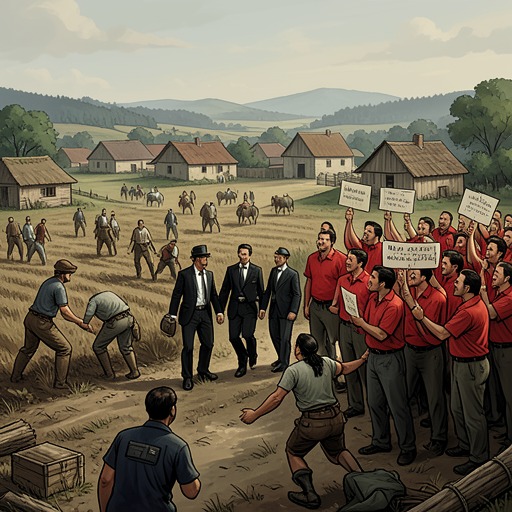
The mobilization began at midnight on May 11. Thousands traveled from isolated farms toward the city on foot, by bicycle, in wagons, and on barges moving along the canals. By the following morning, about 50,000 farm laborers had entered Ferrara. The city was paralyzed: Balbo ordered telephone lines cut, school buildings requisitioned for lodging, and shops and businesses closed. Fascist detachments controlled the movement, while the arriving workers camped in the streets. Balbo then demanded that police return to their barracks, that fascists take responsibility for public order, and that the workers remain mobilized until the government guaranteed public works.
Negotiations continued for forty-eight hours. The municipal bakery produced 45,000 pounds of bread, and on May 14 word arrived that Minister Riccio had agreed to the demands. Balbo ordered demobilization and treated the outcome as a victory. The occupation showed that fascist power could organize a mass constituency, disrupt a city, and compel the government to respond. It also revealed the movement’s ability to present itself as a provider of work and subsistence, not only as the destroyer of its opponents’ organizations.
Local power and national crisis
Ferrara’s transformation took place amid a wider weakening of state authority. In December 1921, Prime Minister Ivanoe Bonomi attempted to regulate truncheons as weapons and classify fascist paramilitary formations as illegal. Michele Bianchi, the National Fascist Party’s newly elected secretary general, answered by declaring party sections and combat squads inseparable; the directive appeared openly in Il Popolo d’Italia. Bonomi’s attempt to enforce his orders faltered, as the account depicts a government unable to make its directives effective against an armed political movement.
The local and national developments illuminate one another. Ferrara’s squad violence eliminated institutions capable of organizing resistance, while the 1922 occupation demonstrated how the resulting networks could mobilize workers and extract concessions from the government. In Balbo’s region, control therefore meant more than the presence of fascist squads: it involved the displacement of socialist associations, the redirection of labor into fascist unions, and the capacity to impose political demands through collective action. The countryside became a testing ground for a broader claim that fascism could replace the failing liberal state by exercising authority, providing relief, and presenting the conversion of workers into its own political following as a national renewal.